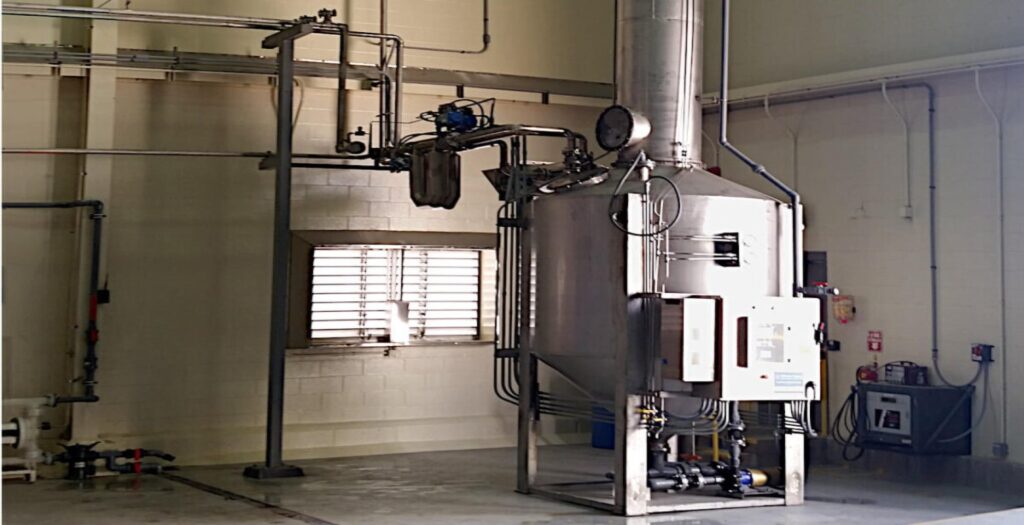

Industrial operations that generate sulfuric acid mist require dependable emission control to maintain safe working conditions and meet regulatory obligations. A properly operating sulfuric acid scrubber serves as a primary barrier against the release of corrosive aerosols produced during chemical processing, metal finishing, fertilizer production, and similar industrial activities. When scrubbing performance declines, even minor system deviations can quickly escalate into corrosion, environmental exposure, and operational disruption.
Emission control equipment handling sulfuric acid operates under severe chemical and hydraulic conditions. Continuous exposure to acidic aerosols, high airflow volumes, and variable mist loading gradually affects system components. Over time, filtration media, ducting, and internal scrubber elements may experience fouling or deterioration that reduces overall capture efficiency.
Recognizing early warning signs allows plant operators to correct these conditions before mist emissions increase or equipment damage occurs. Several operational indicators typically reveal when a sulfuric acid scrubber, sulfuric acid filter, or sulfuric acid mist eliminator requires immediate inspection.
Sulfuric Acid Scrubber Performance Considerations
A well-designed sulfuric acid scrubber system relies on balanced airflow, effective liquid distribution, and properly functioning filtration components to remove acidic aerosols from process exhaust streams. Mist capture generally occurs through a combination of droplet impaction, diffusion, and coalescence within structured media or packed scrubbing sections.
Operational issues often develop when airflow distribution becomes uneven, filtration surfaces become obstructed, or mist loading exceeds the intended design capacity of the equipment. Under such conditions, fine sulfuric acid droplets may pass through the scrubbing zone without adequate contact with the capture media.
As a result, downstream equipment—including ductwork, exhaust fans, and stack systems—may experience accelerated corrosion. Careful monitoring of scrubber performance helps identify these conditions before they compromise system reliability.
1. Declining Mist Removal Efficiency
A reduction in sulfuric acid mist removal efficiency is among the most significant indicators that a sulfuric acid scrubber requires immediate evaluation. When capture efficiency decreases, fine acid droplets remain entrained in the exhaust stream and circulate through the ventilation system.
One common cause is degradation or obstruction of the sulfuric acid filter or internal filtration media. Accumulated particulate matter or chemical deposits can restrict airflow through the system, creating pressure imbalances that reduce droplet capture performance.
Increasing pressure drop across the filtration section or unexplained reductions in airflow often signal that filtration components require cleaning, replacement, or operational adjustment.
2. Visible Signs of Acid Mist Escape
Physical inspection frequently provides the earliest indication of declining scrubber performance. Visible acid mist at exhaust points, condensation forming around duct outlets, or a persistent acidic odor near ventilation systems may suggest that the sulfuric acid mist eliminator is no longer capturing aerosols effectively.
In addition, surface corrosion on nearby structural components can indicate that acidic droplets are escaping the scrubbing system. This corrosion may appear on duct supports, fan housings, or adjacent building surfaces.
Such observations typically warrant immediate inspection of the scrubber internals, including packing sections, liquid distribution systems, and mist eliminator elements.
3. Increasing Corrosion Within the System
Because sulfuric acid is highly corrosive, excessive internal corrosion often indicates that acidic aerosols are bypassing or overwhelming the capture mechanisms within the scrubber.
Corrosion appearing at duct joints, tower walls, or fan assemblies may suggest uneven airflow distribution or deteriorated filtration components. When a sulfuric acid mist eliminator becomes saturated or damaged, droplets may carry forward into downstream equipment.
Early identification of corrosion allows operators to restore system balance before structural damage progresses.
4. Changes in Chemical or Process Indicators
Operational monitoring frequently reveals performance changes before physical symptoms become obvious. Elevated acidity levels in exhaust streams, abnormal pH conditions in scrubbing solutions, or changes in liquid circulation chemistry can all indicate declining scrubber efficiency.
Environmental monitoring may also detect increased sulfuric acid concentrations near process areas. These measurements often point to reduced droplet capture within the sulfuric acid scrubber or insufficient performance of the sulfuric acid filter and mist elimination stages.
Routine measurement of airflow rates, pressure differentials, and chemical conditions provides valuable diagnostic insight into scrubber operation.
Maintaining Reliable Sulfuric Acid Mist Control
Facilities that generate sulfuric acid aerosols depend on consistent emission control to protect both equipment and personnel. Early recognition of declining performance allows maintenance teams to correct filtration degradation, airflow imbalances, and chemical process variations before larger operational problems develop.
Advanced filtration technologies developed by Kimre™ Clean Air Technology support reliable control of corrosive aerosols in demanding industrial environments. Engineered sulfuric acid scrubber systems, high-efficiency sulfuric acid filters, and durable sulfuric acid mist eliminators are designed to maintain stable mist capture performance while protecting critical facility infrastructure.
Organizations seeking dependable sulfuric acid emission control solutions can work with Kimre™ Clean Air Technology to implement systems that sustain long-term operational stability and environmental compliance. Contact us today.