
Electric vehicle adoption continues to rise across Ontario, and home charging is becoming a practical requirement rather than an optional upgrade. Installing a charger at home provides convenience, but it also introduces new electrical demands that must be planned carefully.
A properly designed home EV charger installation ensures safe operation, compliance with electrical codes, and long-term reliability. Understanding the technical and regulatory aspects before installation helps avoid delays, additional work, and safety concerns.
1. Panel Capacity Requirements
One of the first considerations in any residential EV charger installation is the home’s electrical panel capacity. EV chargers draw sustained power, especially Level 2 units, which can operate for several hours at a time.
Electricians evaluate:
- Total service size of the panel
- Available breaker space
- Existing electrical load from appliances and HVAC systems
- Potential need for panel upgrades
Homes with limited capacity may require upgrades before a home car charger installation can proceed safely. Load calculations ensure the system can support both current and future electrical demand.
2. Level 1 vs Level 2 Chargers
EV chargers are generally divided into two types:
Level 1 Chargers
- Use standard 120V outlets
- Provide slower charging speeds
- Suitable for low daily driving needs
Level 2 Chargers
- Operate on 240V circuits
- Require dedicated wiring
- Provide significantly faster charging
Most homeowners opt for Level 2 systems as part of a long-term home EV charger installation strategy due to their efficiency and convenience.
3. Permit and ESA Compliance
Electrical work in Ontario must comply with the Ontario Electrical Safety Code and is regulated by the Electrical Safety Authority. Installing an EV charger requires proper permits and inspections.
Licensed contractors handle:
- Filing ESA notifications
- Completing code-compliant installation
- Scheduling inspections
- Providing approval documentation
A compliant residential EV charger installation ensures the system is safe, inspected, and acceptable for insurance purposes.
4. Charger Placement Options
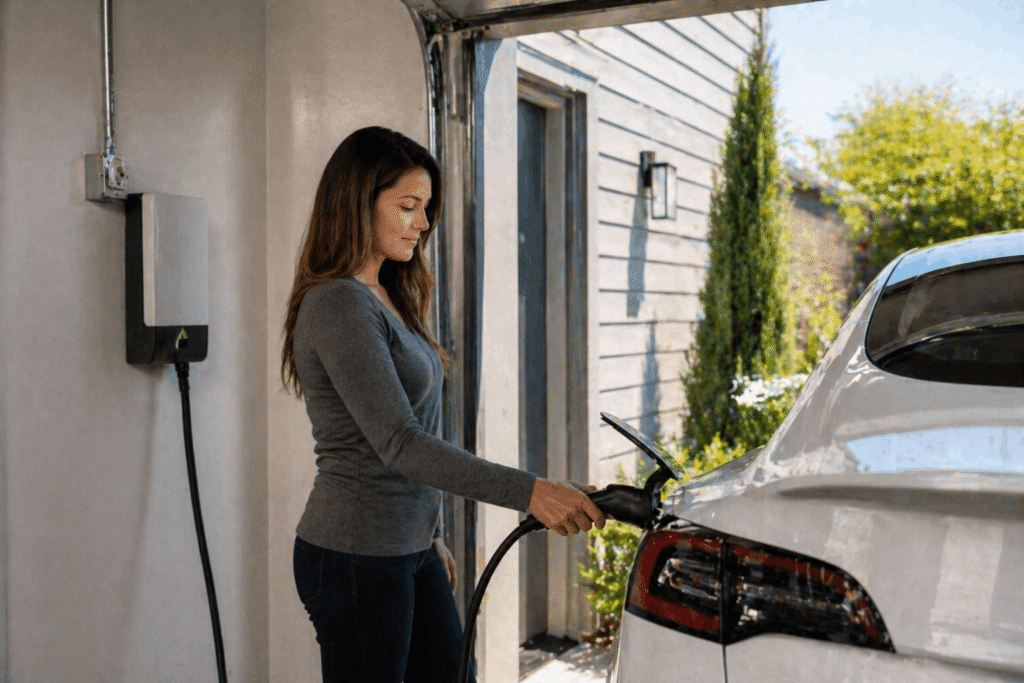
Choosing the right location for the charger affects both convenience and installation complexity. Common placement options include:
- Inside garages
- On exterior walls
- Near driveways or parking areas
Factors that influence placement include distance from the electrical panel, exposure to weather, and cable reach. Outdoor installations must use weather-rated equipment and proper sealing to protect electrical components.
Planning placement early helps reduce installation complexity and ensures efficient home car charger installation.
5. Installation Scope and Timelines
The timeline for home EV charger installation depends on several factors:
- Panel capacity and need for upgrades
- Distance between panel and charger location
- Wiring complexity
- Permit and inspection scheduling
Some installations are straightforward, while others involve additional electrical work. A licensed contractor provides a clear scope and timeline before work begins, helping homeowners plan accordingly.
6. Choosing the Right Electrician
Selecting a qualified contractor is critical for a successful installation. Licensed electricians ensure all work meets Ontario safety standards and is properly inspected.
When choosing a provider for residential EV charger installation, homeowners should verify:
- ESA/ECRA licensing
- Experience with EV charger installations
- Ability to perform load calculations
- Permit handling and inspection coordination
Working with experienced professionals helps ensure the charger operates safely and efficiently.
Canadian Wire Wizards EV Installation Services
Canadian Wire Wizards provides licensed EV charger installation services across the Greater Toronto Area. Their process includes:
- Electrical system assessment and load evaluation
- Dedicated circuit design
- Installation of indoor or outdoor charging units
- ESA permit filing and inspection coordination
Our structured approach supports safe and compliant home EV charger installation for residential properties.
Plan Ahead for a Seamless Installation
Installing an EV charger at home requires more than selecting equipment. Electrical capacity, wiring design, and regulatory compliance all play a role in ensuring safe operation. A properly planned home car charger installation supports long-term performance and future expansion.
Working with licensed professionals ensures installations meet Ontario Electrical Safety Code requirements and are completed without delays. Canadian Wire Wizards provides reliable support for homeowners planning to install a residential EV charger, helping to ensure a smooth and compliant setup. For more information, contact us now!