
Industrial lifting has evolved beyond traditional chain-based systems. Today, operations require solutions that balance strength with flexibility, especially when handling delicate or irregular loads. This is where synthetic slings have become a preferred choice.
Designed for versatility and reduced load damage, synthetic slings offer a reliable alternative for industries seeking efficient and safe lifting methods. Their lightweight construction and adaptability make them ideal for modern material handling environments.
Types of Synthetic Slings Used in Industrial Applications
There are several types of synthetic slings, each designed for specific lifting requirements.
Synthetic Web Slings
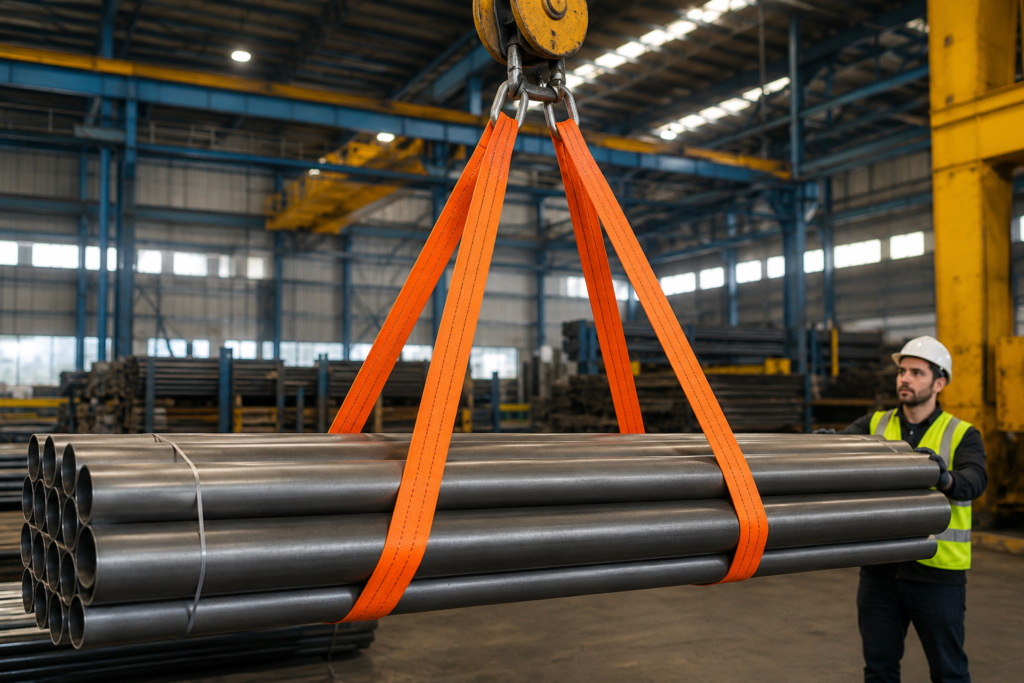
Synthetic web slings are flat, wide straps made from polyester or nylon. They are commonly used for lifting loads with smooth or delicate surfaces, as they distribute weight evenly and reduce pressure points.
Synthetic Rope Slings
Synthetic rope slings are constructed using braided or twisted fibers, offering higher flexibility and strength. These slings are well-suited for applications requiring durability and resistance to abrasion.
Both types provide unique advantages, allowing businesses to select the most suitable option based on load type and operating conditions.
Advantages of Synthetic Slings Over Traditional Materials
Compared to chains or wire ropes, synthetic slings offer several operational benefits:
- Lightweight Handling: Easier to transport and position, reducing worker fatigue
- Load Protection: Soft materials minimize surface damage to sensitive loads
- Flexibility: Adapts to irregular shapes and uneven weight distribution
- Corrosion Resistance: Performs well in environments exposed to moisture or chemicals
While synthetic rope slings provide strength and flexibility, synthetic web slings excel in applications where load surface protection is critical. This combination makes synthetic solutions highly versatile across industries.
Typical Industrial Applications for Synthetic Slings
The adaptability of synthetic slings makes them suitable for a wide range of sectors.
Common Use Cases:
- Manufacturing: Handling finished products and machinery components
- Construction: Lifting materials that require surface protection
- Logistics and Warehousing: Moving packaged goods and palletized loads
- Marine and Offshore: Applications where corrosion resistance is essential
In these environments, synthetic web slings are often used for delicate loads, while synthetic rope slings are preferred for heavier or more demanding lifting tasks.
Inspection, Maintenance, and Safety Considerations
Despite their advantages, synthetic slings require regular inspection to maintain safety and performance.
Key Inspection Points:
- Cuts, tears, or fraying in the material
- Discoloration from chemical exposure
- Damaged stitching or load-bearing fibers
- Signs of UV degradation
Proper storage is equally important. Slings should be kept away from direct sunlight, moisture, and sharp objects when not in use.
Routine checks ensure that both synthetic rope slings and web slings continue to perform reliably. Damaged slings should be removed from service immediately to prevent accidents.
Conclusion – Enhancing Efficiency with Synthetic Lifting Solutions
As industrial lifting demands evolve, synthetic slings have become an essential component of modern rigging systems. Their combination of strength, flexibility, and load protection makes them a practical choice for a wide range of applications.
By selecting the right type—whether synthetic web slings for delicate loads or rope slings for heavy-duty tasks—businesses can improve safety, efficiency, and operational reliability.
Looking to upgrade your lifting equipment? Explore high-performance synthetic sling solutions designed to meet industrial standards and support safer lifting operations. For more information, contact Murphy Industrial Products, Inc. now!