
Chain sling selection directly impacts load stability, lifting control, and overall safety. While both single- and double-leg configurations are widely used, each serves a different purpose depending on the load geometry and lifting requirements. Understanding when to use a single-leg sling versus a 2 leg chain sling helps ensure efficient and compliant lifting operations.
A single-leg sling is effective for straightforward vertical lifts with a single connection point. However, when balance, load control, and multi-point lifting are required, a 2 leg chain sling provides a more stable solution. This blog outlines how each configuration performs and when a double-leg setup becomes the better choice.
Structure of a 2 Leg Chain Sling
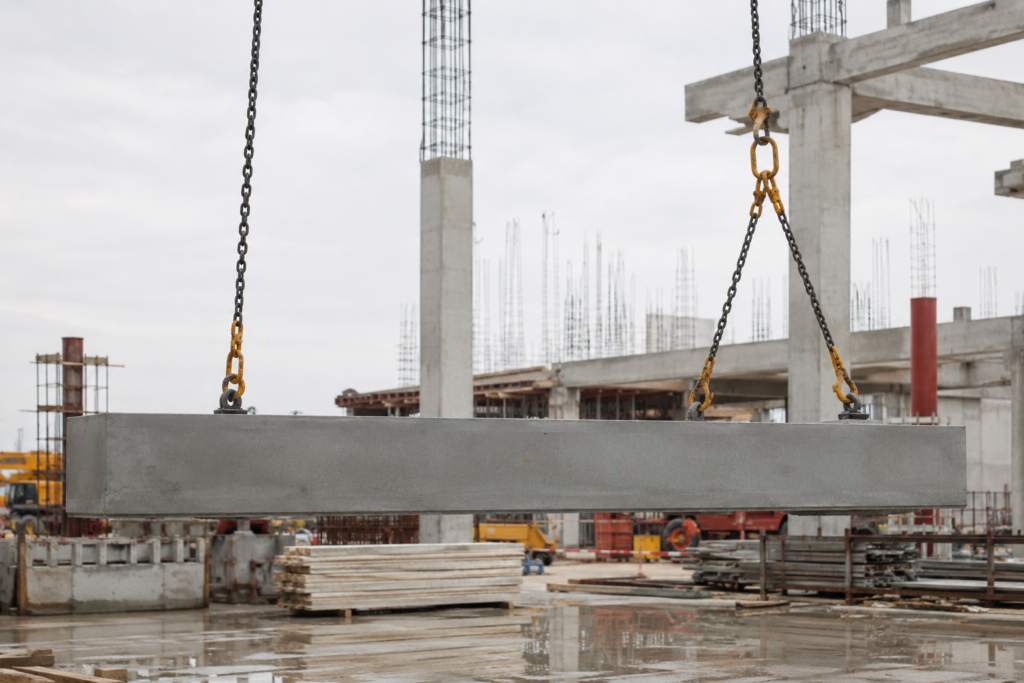
A 2 leg chain sling consists of a master link connected to two individual chain legs. Each leg terminates in a hook or connector that attaches to separate lifting points on the load.
Key components include:
- Master link for crane or hoist connection
- Two chain legs for load distribution
- Hooks or fittings for secure attachment
- Optional shortening devices for adjustment
This configuration allows both legs to share the load, improving balance compared to a single-leg setup. The structure also allows adjustments when the load center of gravity is not perfectly aligned.
Murphy Industrial Products, Inc. provides fully assembled 2 leg chain lifting slings with matched components to ensure proper load rating and compatibility.
Load Balance and Stability Differences
The main difference between single- and double-leg slings lies in load distribution. A single leg sling concentrates the entire load at one point. While effective for vertical lifts, it offers limited resistance to rotation or shifting.
A 2 leg sling distributes weight across two attachment points. This reduces stress on individual connection points and improves stability during lifting and placement.
For loads with defined lifting points, such as machinery or structural components, 2 leg chain lifting slings help maintain alignment and minimize tilting. This is especially important when handling wide or uneven loads.
In practical terms, a two-leg configuration improves control and reduces the need for manual adjustments during lifting operations.
Impact of Sling Angle on Lifting Capacity
Sling angle is a critical factor when using a 2 leg chain sling. As the angle between the legs changes, the tension on each leg also changes.
Key considerations include:
- Wider angles reduce tension per leg
- Narrow angles increase tension and reduce capacity
- Extremely low angles can overload individual legs
For example, a sling operating at a 60-degree angle provides greater effective capacity than one at 30 degrees. Operators must refer to load charts to determine safe working limits based on sling angle.
Ignoring angle calculations can result in overstressing the sling, even when the total load appears to be within limits. Proper angle management ensures safe and efficient lifting.
Murphy Industrial Products, Inc. emphasizes proper angle use when selecting and using 2-leg chain lifting slings.
5 Typical Applications for Two Leg Chain Lifting Slings
Two leg slings are widely used across industrial sectors where balance and multi-point lifting are required.
Common applications include:
- Lifting machinery with dual lifting points
- Handling structural steel beams
- Moving fabricated assemblies
- Construction rigging operations
- Equipment installation in manufacturing facilities
In each of these cases, a 2 leg sling improves load stability and reduces the risk of rotation. It also allows operators to position loads more accurately during placement.
Murphy Industrial Products, Inc. supports these applications with certified lifting solutions designed for durability and consistent performance.
Conclusion
Choosing between a single-leg and a 2-leg chain sling depends on the nature of the lift. Single-leg slings are suitable for simple vertical lifts but offer limited control over complex or uneven loads.
A 2 leg chain sling provides better load distribution, improved balance, and greater control during lifting operations. When combined with proper angle calculation, inspection practices, and certified components, it becomes a reliable solution for industrial lifting tasks.
Murphy Industrial Products, Inc. supplies high-quality 2-leg chain lifting slings designed to meet industrial safety standards and performance requirements. Matching the sling configuration to the job ensures safe, efficient, and controlled lifting operations. Contact us today!