
Basement flooding often happens without warning. A sudden storm, an overloaded municipal sewer, or pressure changes in underground lines can push wastewater back into a home. When this occurs, damage extends beyond floors and walls. Cleanup costs rise quickly, and long-term moisture issues can follow.
Residential backwater valve installation and backflow prevention devices help reduce this risk by controlling water flow through plumbing systems. This guide explains how these systems function, why they matter in Canadian homes, and when installation becomes necessary.
Understanding Sewer Backups in Canadian Homes
Many residential sewer systems connect directly to municipal lines. During heavy rainfall or rapid snowmelt, these public systems can become overwhelmed. When pressure builds, wastewater seeks the lowest point of exit. In many homes, that point is a basement floor drain.
Sewer backups often result from:
- Intense or prolonged rainfall
- Aging municipal infrastructure
- Blocked or partially collapsed sewer lines
- High water tables in urban areas
Without a protective device in place, wastewater can flow back into the home instead of out toward the street.
What a Backwater Valve Does in Residential Plumbing Systems
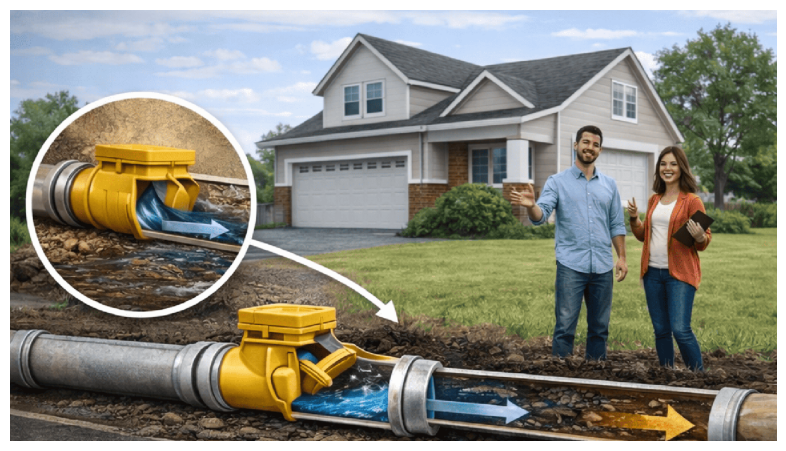
A backwater valve is a mechanical device installed on the main sewer line. It allows wastewater to exit the home but closes automatically if the flow reverses.
Key functions include:
- Blocking reverse wastewater flow
- Reducing the risk of basement flooding
- Protecting floor drains and connected fixtures
Backwater valves are commonly installed below the basement floor, often near the main sewer connection. Local building codes and municipal programs across Canada increasingly recommend or require these devices in flood-prone areas.
How Backflow Prevention Devices Differ
While residential backwater valve installation protects against sewer backups, backflow prevention devices address pressure-related contamination risks. These devices prevent non-potable water from flowing backward into clean water supply lines.
Common applications include:
- Homes with irrigation systems
- Properties with auxiliary water connections
- Areas with fluctuating municipal water pressure
Backflow prevention devices help maintain water quality by preventing cross-contamination between potable and non-potable systems.
Why These Systems Matter for Residential Properties
Flood damage extends beyond visible water intrusion. Moisture trapped behind walls or under flooring can lead to long-term structural concerns. A lack of protective measures can also negatively affect insurance coverage.
Installing backwater valves and backflow prevention devices helps:
- Limit property damage during sewer surcharges
- Reduce cleanup and restoration costs
- Support insurance eligibility in some municipalities
- Improve overall plumbing system resilience
Many Canadian municipalities also offer rebates or subsidies to help offset backwater valve installation costs. This makes flood protection more accessible for residential properties.
Signs a Home May Need Installation
Certain property characteristics increase the likelihood of sewer backup risk. These factors often warrant professional assessment.
Common indicators include:
- Basement floor drains or below-grade bathrooms
- Previous flooding or near-backup incidents
- Older homes with original sewer connections
- Location in low-lying or high-density neighbourhoods
Homes with finished basements face a higher financial risk if backups occur.
Maintenance and Long-Term Performance
Protective devices perform best when maintained consistently. Neglect can cause valves to stick or fail during critical moments.
Maintenance practices often include:
- Visual inspection after major storms
- Clearing debris from valve chambers
- Professional servicing at scheduled intervals
Routine checks help ensure a home flood protective valve system responds appropriately when conditions change.
Protecting Homes from Preventable Plumbing Damage
Backwater valves and backflow prevention devices play a practical role in protecting Canadian homes from costly plumbing events. Understanding how these systems work allows homeowners to make informed decisions about risk reduction and long-term property protection.
Residential properties requiring backwater valve installation or system assessment can reach out for professional support backed by a warranty, WSIB certification, and insured service coverage. A consultation can help determine the right solution based on local conditions and plumbing layout.