
Polycarbonate sheets are widely used across Canada for their impact resistance, clarity, and durability. However, performance is not uniform across regions. Climate differences between Alberta, Manitoba, and Quebec create distinct challenges that directly affect material behaviour.
Selecting the right specification for polycarbonate sheets in Edmonton, Winnipeg, and Montreal requires understanding how temperature, moisture, and structural demands vary by location. A region-specific approach improves lifespan, reduces maintenance, and ensures consistent performance.
Climate Differences Across Cities
Each city presents unique environmental conditions that influence material selection.
Edmonton experiences cold winters with dry air and significant temperature drops. Winnipeg is known for extreme cold, wind exposure, and seasonal humidity fluctuations. Montreal faces heavy snowfall, ice accumulation, and frequent freeze-thaw cycles.
These differences affect how polycarbonate expands, contracts, and responds to environmental stress. A material that performs well in one region may require adjustments in thickness or installation method in another.
Impact On Material Performance
Polycarbonate sheets are designed to withstand impact and temperature fluctuations, but regional climates influence performance.
In Edmonton, dry cold conditions can increase brittleness if improper grades are used. Winnipeg’s combination of cold and wind can introduce additional mechanical stress on installed panels. Montreal’s freeze-thaw cycles create repeated expansion and contraction, which can affect long-term durability.
Polycarbonate offers higher impact resistance than other glazing materials, making it suitable for all three regions. However, performance depends on correct specification and installation practices aligned with local conditions.
Thermal And Structural Considerations
Thermal performance is a critical factor when selecting polycarbonate sheets in Canadian climates.
Multi-wall polycarbonate sheets provide better insulation due to internal air chambers. These chambers reduce heat transfer, making them suitable for colder environments such as Winnipeg and Montreal. Twin-wall sheets offer moderate insulation and are often used in less demanding applications.
Structural strength must also be considered. Snow load requirements in Montreal are typically higher, requiring thicker sheets or additional support structures. Winnipeg’s wind conditions may demand reinforced framing to prevent flexing or displacement.
In Edmonton, temperature fluctuations require materials that can handle expansion without compromising structural integrity. Proper spacing and fastening systems help accommodate these changes.
Installation And Moisture Control
Installation plays a significant role in polycarbonate performance across all regions.
Moisture control is especially important in colder climates. Improper sealing can allow condensation to form within multi-wall chambers, reducing insulation efficiency and affecting clarity. Correct edge sealing and ventilation techniques prevent internal moisture buildup.
Thermal expansion must also be managed. Polycarbonate expands and contracts with temperature changes, so installation systems must allow for movement. Over-tightening fasteners or restricting movement can lead to stress cracking over time.
UV protection is another key factor. Most polycarbonate sheets include a coextruded UV layer that protects against degradation caused by sunlight exposure. Proper orientation during installation ensures this protective layer performs effectively.
Regional Application Examples
Polycarbonate sheets are used differently across Edmonton, Winnipeg, and Montreal based on environmental needs.
In Edmonton, common applications include industrial covers, signage, and protective barriers where impact resistance is critical. In Winnipeg, polycarbonate is often used in agricultural structures, greenhouses, and enclosures that benefit from insulation and durability.
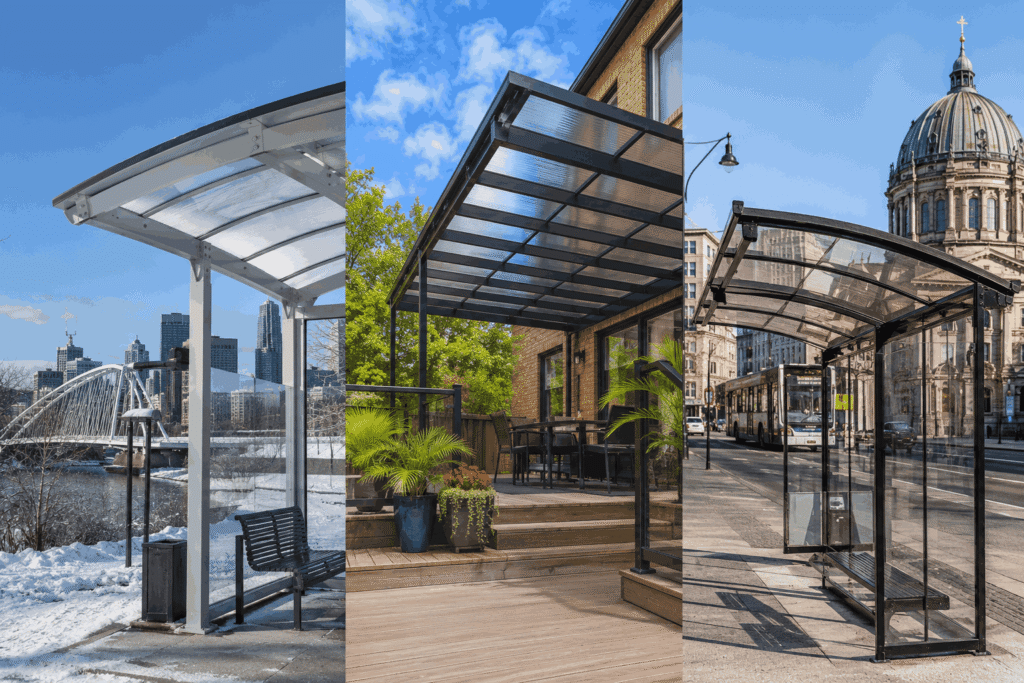
In Montreal, applications such as skylights, covered walkways, and transit shelters require materials that can handle heavy snow loads and repeated freeze-thaw cycles. Multi-wall polycarbonate is frequently used in these environments due to its insulation and structural performance.
These regional differences highlight the importance of selecting the right configuration for each application.
Updated Insights For Buyers
Buyers evaluating polycarbonate sheets in Edmonton, Winnipeg, and Montreal should focus on performance factors rather than appearance alone.
Key considerations include:
- Sheet thickness and wall structure
• Insulation requirements based on climate
• Load-bearing capacity for snow and wind
• Proper installation systems
• Moisture control and sealing methods
Working with suppliers that understand regional conditions helps ensure the correct material is selected for each project. Access to technical guidance and local distribution networks improves both efficiency and reliability.
Conclusion
Polycarbonate sheets offer strong performance across Canadian climates, but regional conditions significantly influence outcomes. Edmonton, Winnipeg, and Montreal each present unique challenges related to temperature, moisture, and structural demands.
Selecting the right material involves more than choosing a standard sheet. It requires aligning insulation, strength, and installation methods with local environmental conditions.
Businesses seeking reliable polycarbonate sheet solutions in Edmonton and across Canada benefit from a structured approach to material selection. This ensures long-term durability, improved efficiency, and reduced maintenance across diverse applications. For more information, contact us now!