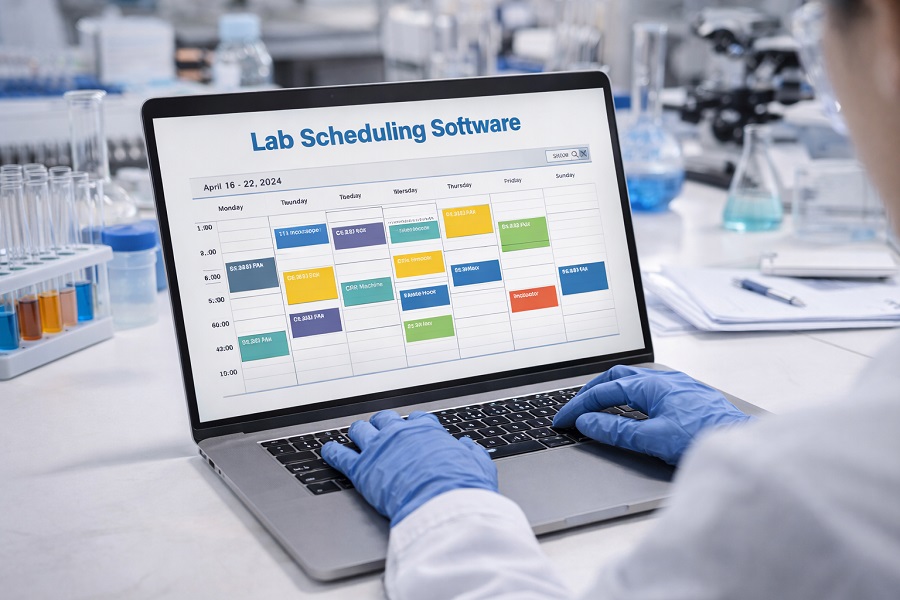

As biotech workflows become more automated, scheduling software has moved from a convenience to a core operational requirement. Modern labs rely on multiple instruments, shared resources, and tightly timed processes. Without centralized coordination, even well-equipped labs can experience bottlenecks, idle equipment, and inconsistent results.
That’s why selecting the right lab scheduling software is a critical decision. The platform must do more than queue jobs—it must orchestrate instruments, manage dependencies, and support scalable automation. Two platforms frequently evaluated by biotech teams are GENERA and Cellario, each offering different approaches to automation control.
Overview of GENERA and Cellario Platforms
Both GENERA and Cellario are designed to manage automated laboratory workflows, but they are built with different philosophies.
GENERA is developed as an orchestration-focused platform. It acts as a central automation layer that coordinates instruments, workflows, and timing across the lab. Rather than focusing on a single vendor ecosystem, GENERA emphasizes flexibility, device-level control, and dynamic scheduling.
Cellario, on the other hand, is commonly deployed in large, fully integrated automation systems. It is often paired with specific hardware configurations and designed to manage complex robotic cells with tightly predefined workflows. This makes it a strong option in environments with highly standardized automation layouts.
Understanding these foundational differences helps biotech teams align platform capabilities with real operational needs.
Comparison: Integration, Scheduling Intelligence, Automation Depth
When comparing these platforms, three areas matter most: integration, scheduling intelligence, and depth of automation.
Integration
GENERA is designed to integrate directly with a wide range of instruments and systems using APIs and device drivers. This allows labs to connect existing equipment without major infrastructure changes. It also supports integration with LIMS and data systems, enabling smooth information flow across workflows.
Cellario typically excels in environments where instruments are already part of a tightly integrated automation cell. While powerful, integration outside predefined setups may require additional configuration or constraints.
Scheduling Intelligence
GENERA functions as advanced automate scheduling software, dynamically adjusting workflows based on instrument availability, task completion, and priorities. If one step finishes early or an instrument becomes available, GENERA reallocates resources automatically to minimize downtime.
Cellario relies more heavily on predefined workflow logic. This works well for fixed processes, but can be less flexible when workflows frequently change or expand.
Automation Depth
Both platforms support high levels of automation. GENERA focuses on orchestration across diverse systems, allowing labs to incrementally automate without redesigning their entire setup. Cellario is optimized for deep automation within fully built robotic systems, offering strong control when workflows remain consistent.
Best-Fit Use Cases
The right choice depends on how a lab operates today—and how it plans to grow.
GENERA is often the better fit for:
- Biotech labs with mixed-vendor instrumentation
- Teams planning phased automation rather than full system replacement
- R&D environments where workflows change frequently
- Labs that need flexible automation software to coordinate multiple processes
Cellario may be better suited for:
- Large-scale screening facilities with fixed automation cells
- Highly standardized workflows that rarely change
- Environments where automation infrastructure is already tightly integrated
Evaluating current workflow variability, expansion plans, and integration requirements is essential before committing to either platform.
Final Verdict for Biotech Labs
There is no universal winner—only the right solution for a specific lab strategy. For biotech teams prioritizing flexibility, scalability, and intelligent orchestration, GENERA offers a strong advantage. Its ability to integrate with diverse instruments and dynamically manage workflows makes it well-suited for evolving R&D environments.
Cellario remains a powerful option for labs operating large, fixed automation systems with predictable processes. However, for many modern biotech teams navigating growth and change, the decision often comes down to GENERA vs. Cellario and the level of adaptability their automation strategy requires.